Cooking a landscape where bookcases and lamps all have their own taste

First things first…
For Root’s fourth (!) birthday, and in celebration and gratitude for how far my little business has come with your support, I’ve made this thank you cookbook, with a collection of some of my favorite recipes from Root over the years (and a few others besides). I’m only sharing it with paid subscribers, because I’m so grateful you are along on this ride with me and supporting my work.
Thanks to your belief in Root (and me), I’m able to write, create, and engage in community building in ways I never thought possible. Thank you!
You can download your thank you cookbook at this link (and a thank you to the ever-wonderful Victoria Peri for helping me pull it together!)
Synesthesia: A culinary-ish history
This month, I want to take us on a journey that’s both historical and personal: namely, the intersection of my own culinary and sensory experience within a larger history.
Synesthesia is when you experience one of your senses through another sense (or multiple senses). Some people refer to it as ‘crossed wires,’ where the wire for smell and the wire for sound, for example, overlap so that you experience both senses when you hear certain sounds.
While there are multiple forms of synesthesia, gustatory ones (where non-food things trigger taste) are among the most rare. For many gustatory synesthetes, words have flavors, or songs, but for a select few *everything* has a flavor. For visual-gustatory synesthetes, everything we look at tastes like something. This is the kind of synesthesia I have, and for this newsletter we’ll be looking at the history of synesthesia and enjoying some recipes I developed based on the flavor of my world.
First, a little history
Our history of classifying “disorders” is complex, to put it mildly. One famous example is hysteria (literally “wandering womb”), which goes back to the Ancient Greek belief that women behaved irrationally because our uteruses would wander around our bodies, wreaking all kinds of havoc. Hysteria was a medical concept for centuries, even through the 19th century, and it’s a term we still use today to describe “irrational” outbursts, whether or not we’re aware of its gendered history.
There are plenty of other examples out there, of course, from autism to left-handedness, but all of them highlight the changing nature of our understanding of medicine and physiology as well as our changing cultural perspective on what a “disorder” is. Homosexuality, for example, was officially classified as a mental illness until the 1970s, and removing it from the manual was one big step forward for queer folx like me.
Synesthesia, though considered abnormal, has never really been pathologized in the way so many other things have. Synesthetes have, for the most part, been looked at as a curiosity, as people with a different perspective on the world but whose perspective is not considered dangerous or threatening per se. Though documentation of synesthesia goes back to the late 1700s, and it was given a series of names in the 19th century illustrating the underlying causes researchers believed they had found: heightened senses, or a “disturbance of vision,” as two examples.
The first use of synesthesia as a term comes from the 1860s and French physiologist Alfred Vulpian. However, his use of the term wasn’t exactly how it’s used today: Instead, he applied it to people who had physiological reactions (coughing/sneezing) to touch. Terms continued to change, though, and earlier documentation of synesthetes was forgotten, opening the door for the Austrian synesthete Fidelis Alois Nussbaumer. In 1873, Nussbaumer, who considered himself the first synesthete in history and was the first person to name it, suggested it be called Phonopsie (phonopsia) for Töne-Sehen (seeing sounds).
About a decade later, we finally begin to see a more scientific approach to understanding synesthesia. Up until this point, documentation relied on individual case studies alone: little was done to compare synesthete’s experiences or to even understand different sensory triggers.
In 1881, Swiss medical students Eugen Bleuler and Karl Bernhard Lehmann documented six different kinds of synesthesia. And, most importantly for us, this is the first documentation I’ve found of gustatory synesthesia, which they describe as ” color sensations for gustation perceptions.” These two also noted a continuum between people with and without synesthesia (in other words, a spectrum of levels of intensity from no synesthesia at all to extreme sensory overlap), and also noted that its presence was not connected to mental illness.
Even after their discovery of gustatory synesthesia, researchers still (and even today) primarily focused on people who hear in colors, and until the turn of the 20th century audition colorée (hearing in colors) was used to describe every form of synesthesia. We do see some research on gustatory synesthesia though, including Paul Sollier (1892), A.H. Pierce (1907), and Ferdinand Suarez de Mendoza (1890).
Research focused on case study and description flourished for the next 30ish years, falling out of favor by midcentury. For 30 years after, little to nothing was written on synesthesia until 1975, and renewed interest in the following decades has shown that synesthete’s experiences are consistent across time and measurable in the brain.
We still don’t know the causes behind synesthesia, gustatory or otherwise, but researchers have begun to use brain imaging and other techniques to test their theories.
For many synesthetes, the extra sensory input can be overwhelming, but almost all of us that have been studied report it as a gift: it’s like having a bonus sense, like a secret track on an album version that only had a few copies made.
What even is normal?
I fall into the category of folks who see their synesthesia as a blessing. Everything I look at has a taste and sometimes also a smell connected to that taste, and it informs my culinary practice in a variety of ways (I’ll dive a bit more into that later this month).
As a historian, it makes me wonder how many other cooks have been equally informed by the flavors around them that only they can perceive. Did they share my equal parts frustration and joy with this disconnect? Are there whispers of their culinary exploits, the flavors of their extra sense(s), still to be found in the dishes we eat today?
We’ll almost certainly never know the answer, sadly, but that perspective has prompted me to think more explicitly about how my own synesthesia maps to my culinary practice.
For as long as I’ve been cooking, I’ve been putting together combinations based on what (to me) are familiar tastes: lavender and caramel, for example, which is what some hardwood floors “taste” like in my mind.
But recently, I’ve started trying to map the flavors of my world onto food more intentionally. My first experiment was with my bedroom lampshade. I’ve always known its “taste.” But the problem was translating that taste into different foodstuffs, especially when the flavor didn’t immediately remind me of a recognizable food.
I found it was easiest to start with texture: what foods or preparations mimicked the texture my brain envisioned when I looked at the lamp? From there, I could narrow down what foods might have the flavor I was looking for.
It turns out the lampshade tastes a lot like sesame seed-crusted tofu, baked and served crispy.
My antique bookcase, a beautiful dark wood cabinet with glass doors, “tastes” a lot like toasted cacao nibs, blended with yogurt and a dash of smoky bitters.
And Little Bits, my favorite chicken, “tastes” a lot like blueberries and rice. Not like chicken at all.
These experiments opened up a whole world for me: Finally I could start to translate the experiences I had into a format that could be shared with others.
Sesame-crusted tofu
My synesthetic landscape is full of textures and flavors: this one is inspired by the texture and flavor I perceive when I look at my bedroom lampshade, especially when I have a warmer-toned lightbulb in the lamp itself.
I like to serve this tofu with a simple sauce of soy sauce, sesame oil, and scallions, or with chili crisp, but it goes well with just about any sauce you care to include. It’s also very good on top of salads and noodle dishes.
1/2 c rice wine vinegar
2 tbsp toasted sesame oil
1 tsp salt
1 12 oz package extra firm tofu
1 egg, beaten
1 c sesame seeds
cooking spray
-Preheat oven to 350F.
-In a box, whisk together the vinegar, sesame oil, and salt.
-Cut tofu in 1/2 inch slices. Pour half the marinade over the top, flip, and pour remaining marinade on the other side. Refrigerate, covered, for half an hour to two hours.
-Remove your tofu from the marinade and gently pat with a paper towel to remove some excess moisture.
-dip your tofu slices in the beaten egg, then in sesame seeds to coat evenly.
-Bake at 350 for 20-30 minutes or until crisp and slightly browned. Serve warm.
Bookcase bitters
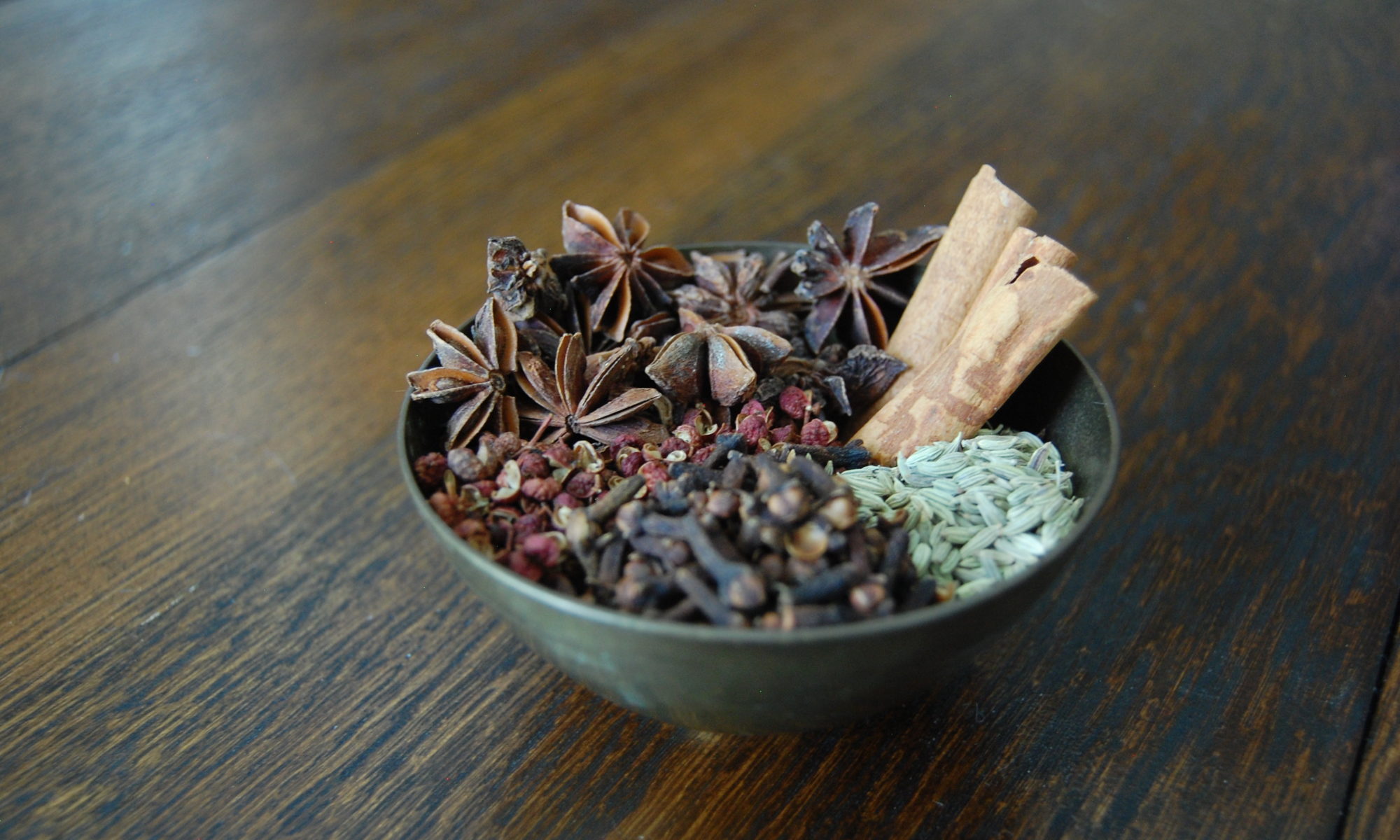
These bitters add richness to yogurt smoothies or depth to your whiskey drink. If you want a smokier, saltier bite, just add more of the smoked salt. To go down a completely different rabbit hole, you can also add another piece of star anise to get the licorice/chocolate notes of Icelandic chocolate.

Subscribe to continue reading
Become a paid subscriber to get access to the rest of this post and other exclusive content.