Creative Ferments: Your March Recipe Round Up includes early access to recipes from Essential Food Preserving plus Chili-lime sauerkraut, fermenting with flowers, and more

I’m fresh off the plane from Ireland, landing back in my other home in Atlanta for 6 weeks. It’s a relief to get to give my cats a big squeeze and to see the sunshine for more than a few hours (I love you Cork, but this winter was extra gloomy even by our drizzly winter weather standards).

The first thing I do to mark the moment when I return home is to hug my pets (and maybe go to sleep). The second thing I do is make sauerkraut.

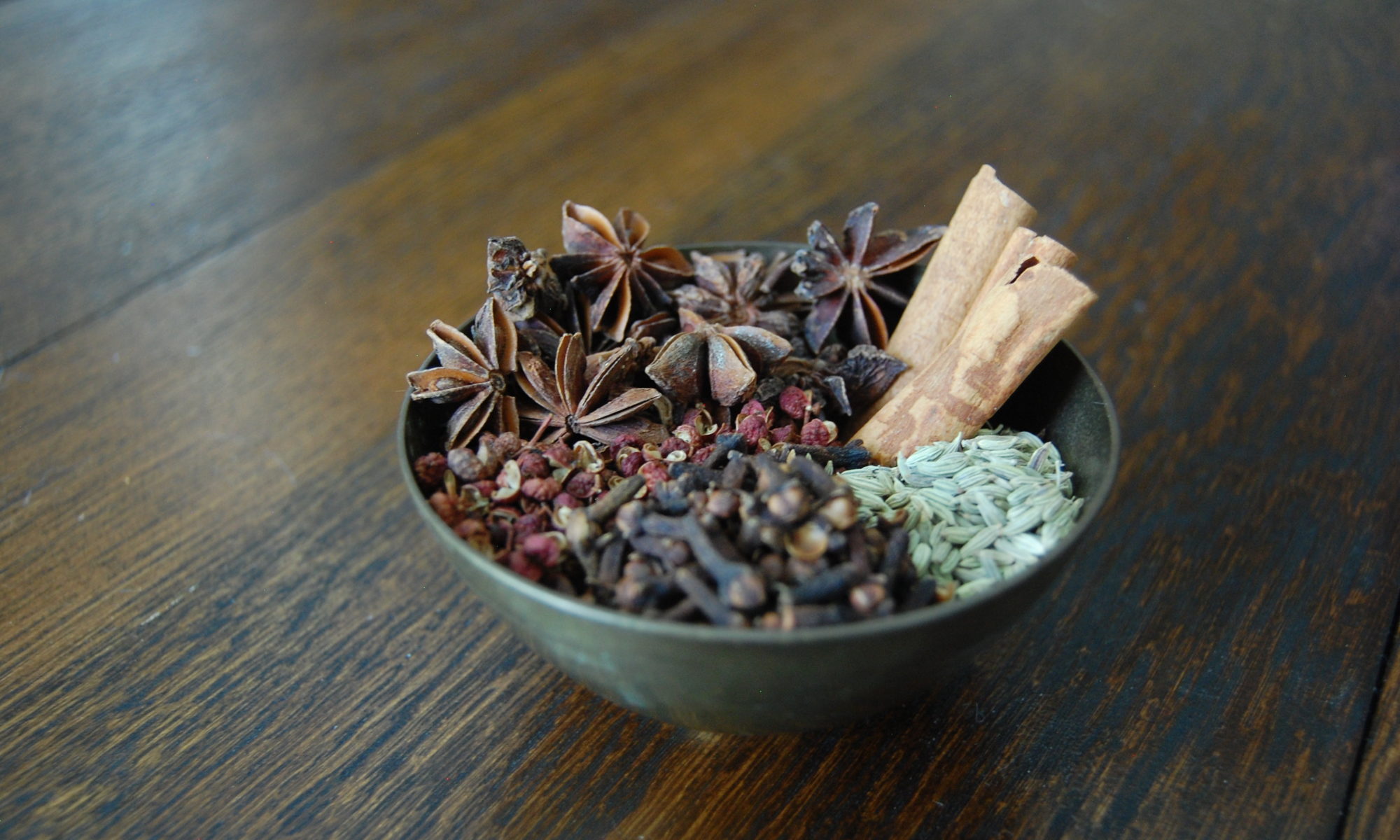
This morning, I woke up before dawn, and simmered a pot of good smelling spices on the stove to scent the house while I worked away on my fermenting projects. 

I made sauerkraut filled with fragrant herbes de Provence, one of my go to blends, particularly in Springtime. 

And I made this chili-lemon-garlic sauerkraut (below), studded with flecks of minced garlic and lime zest and cranked up a bit with dried chilies, which I crushed with my hands into the sauerkraut as I massaged the salt into the cabbage.

Along with these, I decided to share a few favorite recipes with you that are front and center in my new book, Essential Food Preserving.

These are ones that make the most of springtime flavors and ingredients, but most of all, offer creative license. 

Right now, I know many folks are feeling afraid to feel joy, have fun, or share anything but serious news updates with others.

I’m challenging myself to reject that tendency, not because the news isn’t serious, but because I can’t thrive on seriousness alone. I thrive on reminders of why life is so beautiful and worth living and sharing, and that will keep me going and showing up for others for longer and with less burnout than cutting off joy ever would. 

So in lieu of a doomscrolling session, I’m inviting you into the kitchen with me this week to make some food that brings you joy. Maybe it’s one of these recipes. Maybe it’s something else. 

Maybe you cook during the middle of the night when you bolt awake and can’t get back to sleep. Maybe, like me, you start the day with preparing something that lets you just be calm and present. Or maybe you fit a few minutes of simple food prep (even just whisking together a vinaigrette you like) between the many blocks in your full schedule.

I’d love to hear about what you make (in the comments, or email me if you prefer), but most of all, how it felt to make something fun and just enjoy the moment. And, of course, if you shared it, I’d love to hear that too. 

News: Announcing my next book  + Earth Day classes

I alluded to the next book before, but now it’s official: The Little Book of Lemons, comes out in 2027 from Storey!

It’s full of history, recipes, folklore, home care, and a few lil’ lemon spells to bring the magic of lemons into your home. I can’t wait to share it with you!

Earth Day-adjacent group and corporate workshops are filling up: These are 1-2 hours covering 1-2 skills (e.g. fermenting, reducing food waste, infusing vinegars, foraging for spring greens, or mindfulness in the kitchen). Both virtual and IRL versions are available.

I’ve got a few more spots for early-mid April in person spots in Atlanta, as well as virtual workshops for folks outside Atlanta (these can be live workshops to your group, or recorded and shared with you).

So far that week, I’m doing two corporate fermentation workshops, each 1 hour long with 30-40 folks. I absolutely love doing these because I get to share the magic of fermentation with people who otherwise might not get a chance to learn it (and I usually get invited back to do multiple sessions). 

Some folks also prefer to license out my recorded workshops, which gives everyone access to the class on their schedule. 

If you’re still looking for a workshop to celebrate Earth Day (or any day), please get in touch: Julia@root-kitchens.com

And finally, Essential Food Preserving comes out in May (I’ve been busy!): For everyone who preorders you’re getting an extra special gift from me, and there will be a giveaway for US-based preorders in partnership with some of my favorite folks. More details on all of this soon but, in the meantime, please preorder so I can thank you with some extra gifts! 

Your monthly recipe round up includes:

  • Chili-lime-garlic sauerkraut
  • Seasoning paste with preserved lemon
  • Flowerkraut
  • Working with stinging nettle (yes you can eat them, and yes they’re delicious)
  • Rhubarb and black pepper relish
  • Canning rhubarb
  • Rhubarb syrup

Keep reading for some of my favorite springtime foods!

Where I’ve appeared recently:

At Organic Growers School conference, where I’m presenting a full-day workshop on food preserving and community resilience with the amazing Ashley English. I’ll be there live-but-virtually due to Life Stuff, and I’ll miss getting to give you all hugs in person this year (we’ll make up for it next year).

I’m teaching simple lactofermented pickles and fire cider, as well as leading the group in a guided mycelial meditation and sharing ideas for using your preserving practice as part of mutual aid and community care.

In this article on adding sauerkraut to Thanksgiving menus, plus this cookbook round up from the Cookbookery Collective featuring Essential Food Preserving. This spring is REALLY good for food books: And I’m excited by a lot of the titles on this list. 

I have more events planned through September/October that I’ll announce soon, but I still have space for more so, get in touch if there’s somewhere you’d like to see me or you want to book me to come speak or teach with you.

This month I’m also kicking off my 9 month holistic creativity coaching program, Symbiosis, which I rebuilt from the ground up to be ~1000x better, with new resources and focus areas that build on each other throughout the year. 

This group workshop is 100% virtual, with 2 meetings a month (sometimes more), space for live coaching between calls, and a completely revamped and improved resource library.

The program includes practical strategy to build productive creative time into your week, alongside energy work, magic, and visualization practices to keep that forward momentum aligned with the most expansive, impactful vision of your creative life + work. 

Folks who join can expect to leave with a drastically different creative practice (as in, more joyful and playful, and more sustainable and practical), and we’ll be weaving in some other fun stuff too, including free Reiki I training for those who want it. 

Feel free to email me with questions!

Head here to join us: Paid subscribers remember to use your subscriber discount (send me an email, or check your welcome email, if you forgot it).

Chili-Lime-Garlic sauerkraut

Make sauerkraut as usual and toss with the seasonings before packing into your fermenting containers. 

For each head of cabbage, toss with zest of 1 lime, 3-4 cloves minced garlic, and 3-4 crushed small dried chilis (I used Burlap and Barrel’s whole Cobanero chilis).

I want this one extra crunchy so I massaged minimally and topped off the container with a bit of extra room temperature brine. 

As always, adjust to your taste: More or less chili, massage the cabbage for a long time for a softer texture, or not at all for more crisp. Ferment for a while to get it more sour and funky, less time for a brighter flavor. 

Subscribe to continue reading

Become a paid subscriber to get access to the rest of this post and other exclusive content.

The privilege of stillness

Behind the scenes of my life, I’ve been working in fits and starts on little snippets of memoir, poetry, and other forms that push me outside my comfort zone. I’ve talked in the past about how meditating sitting still is a privilege (a concept I was introduced to by chef Jenny Dorsey years ago), and the below snippet, part memoir, part meander of some sort, is a very early stab at starting to make something cohesive out of those thoughts.

It’s probably about 1/3 of the total piece, but it’s the most finished part, and I thought would be something you would like to see. I’d love to hear in the comments how this resonates with your understanding of what it means to meditate (in other words, do you define it as only one thing? Or can meditation mean many things?)

How does this relate to food writing? Because a lot of what I talk about below relates to culinary labor, particularly unseen labor. Those parts are still weaving their way into this particular piece, but I’m enjoying where it’s going.

Meditation, movement

To sit still is a privilege.

How much of my life has been an oscillation between the privilege (which should be a right) to rest, and the necessity of fitting meditation within the cracks of my being, the tiny fissures in my day, the margins of my time.

I think of meditation as movement. 

I think of John Coltrane’s ‘meditations’ and how ‘to meditate’ does not necessarily mean to sit still in perfect silence with an empty mind, but also to reflect, to create.

How meditation can be an expression of a thought through the rising and falling action of notes. Through the words on a page.

Subscribe to continue reading

Become a paid subscriber to get access to the rest of this post and other exclusive content.

Reading list: Small wonders and falling back in love with writing 

Joy and ease are the order of the day for me this month. It flies in the face of everything around us to proactively seek ways to feel either, but I feel we can’t get past the helplessness and stalemate of the moment without them.

Joy, and ease, invite in possibilities we might otherwise miss. They invite us to view and review ourselves and the world around us through a light that’s realistic, yet hopeful and optimistic too.

Where can we choose to focus our attention to build a future that’s more joyful? Where can we find small ways to invite in some ease, and some joy, now?

Here are some readings I’ve been enjoying in connection with joy and ease, in the kitchen and beyond:

Chandra Ram’s midwinter experiment using citrus to infuse joy into an otherwise bleak season

Meg (of Joy of Cooking fame) writes about cooking lasagne as an antidote to doomscrolling

I talk about digital boundaries often with my holistic creativity coaching clients and this approach, of replacing doomscrolling with something else that’s more joyful, is something that works well for a lot of folks (if you try it, let me know in the comments, will you?)

In my TBR pile: This report on early microbial lifeRebecca Solnit’s The Beginning Comes After the End (currently in preorder).

SPEAKING OF PREORDERS, my next book, all 493 pages of it, is available for you to preorder: Grab a copy at Bookshop.org (or Bookshop UK). It comes out mid-May (June 4 in Europe).

In my TBD pile: Continuing to apply for grants (I apply for 3-5 grants/month). I started this practice 4 months ago and, while the fruits of my labors haven’t paid off, yet, grant funding is in part a clarity of messaging game and in part a numbers game, so I know that my efforts will pay off. Even when I don’t get grants, the opportunity to put down what I’m doing in clear language, and to dreamweave about how I can continue to grow that work with additional resources, is priceless.

I apply for small business grants, since I’m a business owner, but also creative grants. Some grants ride the line between both, and I apply for those too, since being a professional writer is, in fact, a business. 

I find grants through government portals and local small business resources, and through grants newsletters (there are tons of newsletters out there with awards, grants, etc., and it can be useful to poke around and find ones specific to your interests (like this). 

And finally, the below was recently posted by chef Jacques Pepin on Facebook. I remember reading Levi-Strauss in undergrad in Psychology, and this inspires me to dive back in with the eyes of a food writer to see what new gems emerge:

“Brillat-Savarin said in one of his aphorisms, “You are what you eat. I believe that for many people “I am what I cook,” because I have been defined by my cooking most of my life. Claude Levi Strauss, a French anthropologist, describes the process of cooking in his seminal book, The Science of Mythology, as the process by which nature is transformed into culture. Well, going back as far as my memory can take me I see a kitchen in my vision of my mother, my aunts, my cousins, and I visualize that process in a specific dish for each of them.  

Be well. -JP”

Where I’ve appeared in the media recently:

This article on adding sauerkraut to your Thanksgiving menu

Late last year, my Culinary Curiosity School classes were featured in The Guardian. It’s great to see that aspect of my work both recognized and placed within the larger conversation of experiential gifts (rather than gifting people clutter they don’t want or need). 

As a reminder, paid subscribers get 30% off all those classes, always. Find the discount code in last week’s email or email me if you’d like a reminder. 

I was also recently interviewed by Food & Wine about (surprise!) pickles.

And, I’m pleased that my work here in Ireland is starting to take root, including mentions in local media for my recent fire cider class (co-taught with Aleesha Wiegandt) and the ‘Get Published!’ panel I was part of in January.

Things I’ve published recently and other news:

I wrote this roundup/guide for building simple, daily rituals into your 2026 for The Guardian

For Produce Parties, I wrote a piece on the last words my mother told me along with reflections on how being raised in a strict evangelical church shaped my relationship to food. You can order a copy here. 

I’m also in the next issue of Eaten, a longtime bucket list publication for me, with a piece on food waste and feasts. You can order the issue, on feasting, here. 

A reshare of this piece on gardening and climate change, written originally for Gravy and republished in Rough Draft Atlanta. 

Last year, I helped with the bibliography and some of the behind-the-scenes work on this book (yes, I do some book indexing, fact checking, formatting, etc. as I have space in my schedule), and it’s great to see it out in the world: The book is part memoir, part study on ableism in religious spaces, and blends both beautifully. It’s by far one of my favorite projects I’ve helped with in this way.

The book is: Healing Ableism: Stories about Disability and Religious Life by Darla Schumm

I rarely write poetry, and even more rarely share poetry I write…but I felt called to share this one about falling (back) in love with writing:

Subscribe to continue reading

Become a paid subscriber to get access to the rest of this post and other exclusive content.

Want to take my new food preserving class? Open this newsletter for access

The newsletter has moved over to WordPress. There are still stumbling blocks but, we are here! If you were a paid subscriber in Substack, your payments there have been paused, and you’ll need to upgrade your subscription by clicking below to access paywalled content here. 

It’s $3/month: Which is $2/month cheaper than Substack or Patreon so, a win-win all around. 

To thank you for your patience as I made the switch, I’m offering folks who stick with me as paid subscribers a free class, plus 30% off live coaching calls, to be used for anything from book proposal coaching to building a writing routine, to fermentation questions or energy work (I know, I’ve got range). 

Details on all of that below!

Here are the classes I’m offering for free to paid subscribers (and to $5/month+ Patreon subscribers, if you want to go that route):

Here’s how to get your free class, plus your link for 30% off private coaching with me (which can be used whenever):

Subscribe to continue reading

Become a paid subscriber to get access to the rest of this post and other exclusive content.

I wrote not one but TWO new books (plus a recipe I’ve been making since undergrad)

Hello friends,

This week I’m sharing a simple recipe I started making in my early 20s, and wrote in the first of many homemade recipe books I gave to family each holiday: Printing them out on the library printer and binding them with whatever ribbon I had handy. 

But first a few things that are bringing me joy this week:

I wrote a lil’ piece for The Guardian on weaving rituals and small moments of joy into every day. Perfect for the new year.

Eaten Magazine is one of my bucket list publications, and this next issue on feasts, I get to cross that off my list as I have an article on repurposing food waste in Early Modern feasting. Order the Feast issue here. 

Have you preordered Essential Food Preserving yet? Preorders are great for authors and influence the whole lifecycle of the book: And we’re lining up some pretty great bonus preorder gifts for you that I’ll announce soon. Order your copy here

Oh and drumroll please, because…I have another book under contract! I’ve just handed in the manuscript for my next-next book (which comes out next year): The Little Book of Lemons. 

It does what it says on the tin: It’s a book all about the history and many uses of lemons. I’m discovering after a big book project (like Essential Food Preserving) I like doing a smaller, more focused project as a palate cleanser of sorts: There’s something really rewarding about that specific form of shifting gears that I love. 

More on this book soon!

On to the recipe: 

(PS if you were a paid subscriber on Substack, upgrading below *should* work to change your subscription here. We’ve had some hiccups with WordPress and the newsletter so, thanks for your patience. If you have questions, or run into issues, email me please: julia@root-kitchens.com)

Subscribe to continue reading

Become a paid subscriber to get access to the rest of this post and other exclusive content.

What food preservation technology to use, when

The first-ever newsletter issue from my self-hosted newsletter platform!

If you were a paid subscriber on Substack, head below to resubscribe and access paid content again (as promised, it starts at $3/month):

Choosing a food preservation technique based on your kitchen equipment

I recently designed and released a new course called Resilience and Community Care through Food Preserving, based on my previous work teaching these concepts in person. I get asked to teach about this particular subject quite often, but as schedules, locations, etc. don’t always align, the new class is a way for me to get a ready-to-go version in the hands of people who need it.

One of the elements I added to the class last-minute was the chart below, inspired by many of the conversations I’ve had over the years where people want to know what food preserving techniques work best with the technology and infrastructure they have access to.

If you live off grid, an electric dehydrator uses valuable juice from your generator, but a solar dehydrator (provided you’re in the right climate for one) might be a better solution. Fermentation, not surprisingly, works in any kitchen setup, provided that it’s not blisteringly hot or ice cold. But many other techniques (like canning) do require some sort of technology (at bare minimum a heat source: And canning over a wood fire is hard because you have to keep the pot consistently boiling without all the water boiling off. But, it can be done if you’re feeling experimental!)

Subscribe to continue reading

Become a paid subscriber to get access to the rest of this post and other exclusive content.

Historic food as a path to the future

The messiness, and interconnectedness, of tradition and memory

This is a (heavily adapted) talk from a women’s herbalism retreat I gave a handful of years ago. As we move into the new year, I’m revisiting this work and thinking about how it continues to shape me. I’d love to hear your thoughts in the comments!

I see food as a connective thread that connects us to past, present, and future. But that thread isn’t always a clean line: It’s one informed by colonialism, by our own messy pasts, by our dreams for the future, and by the millions of tiny ways that each of our lives is simultaneously singular and unique, and deeply interconnected and unremarkable.

Working with our hands, creating something ourselves or in community, exists with the potential of being a revolutionary act.

When we connect with traditional food making practices, we’re connecting to the act of being creators rather than consumers. We’re doing something rather than having life done to us.

And when we go further by connecting others with these practices, we’re imagining systems that honor nature, strengthen communities, and return to the knowledge sharing practices so central to humanity for many thousands of years. We’re also imagining the world as it can be, rather than it is.

Subscribe to continue reading

Become a paid subscriber to get access to the rest of this post and other exclusive content.